Tokyo Falls from the Throne: Jakarta — The World's New Demographic Center and an Analysis of Urbanization Challenges

AI Summary
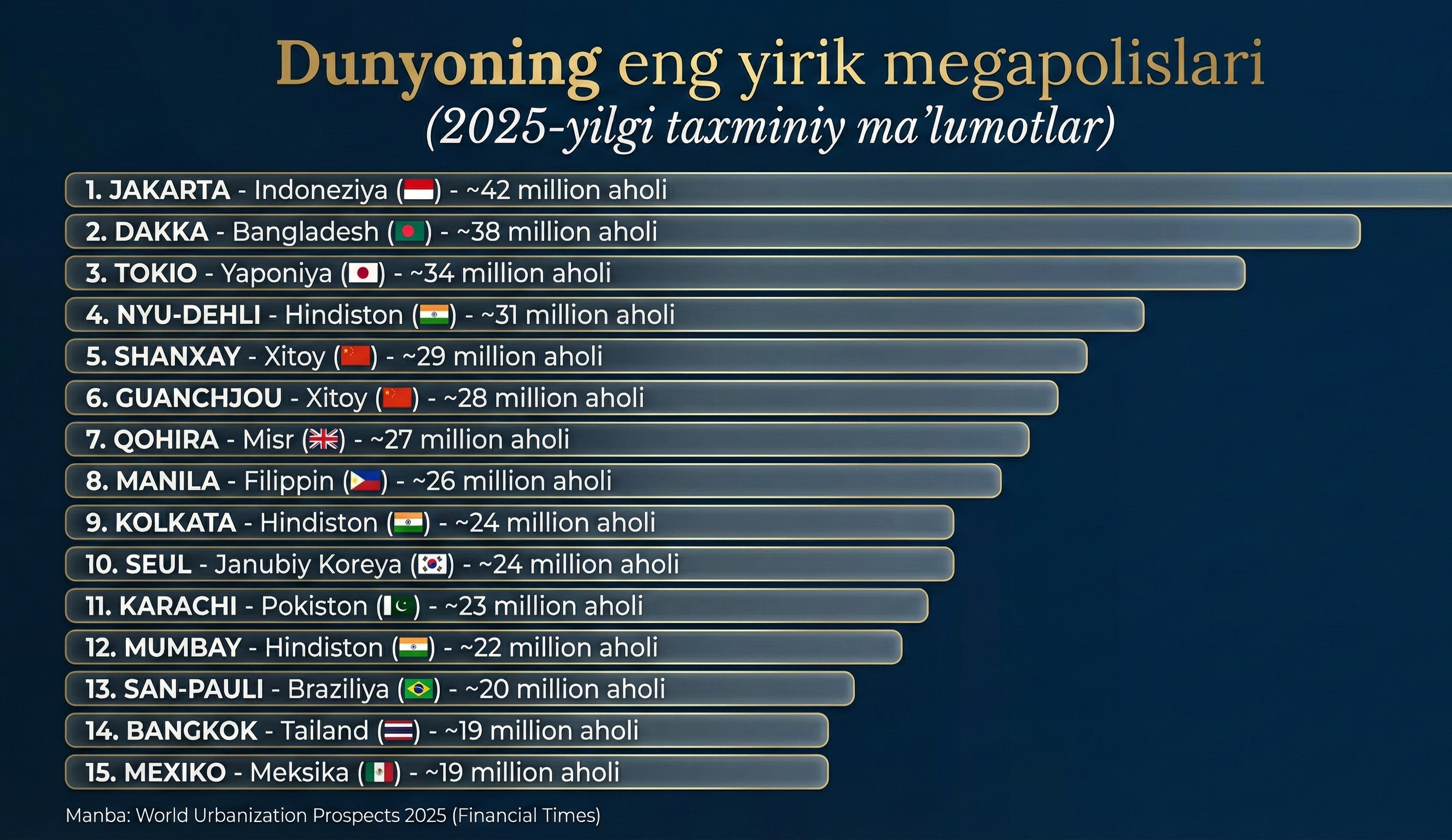
For decades, Tokyo held the title of the world’s largest demographic center. However, the latest findings from the Financial Times and World Urbanization Prospects 2025 reveal a strategic shift on the global urban map: the Indonesian capital, Jakarta, has officially emerged as the world’s most populous megacity.
These rankings utilize the standardized "degree of urbanisation" methodology, which redefines city boundaries for more accurate global comparisons. According to 2025 year-end data, Jakarta’s population has reached approximately 42 million people, marking a historic demographic peak. Dhaka, the capital of Bangladesh, follows in second place with 38 million residents, while long-time leader Tokyo has dropped to third with 34 million.
Resource Strain and Geophysical Constraints
The population density in Jakarta is more than a demographic figure; it represents a complex set of infrastructural and geophysical crises. Significant parts of the city are sinking at an average rate of 1 to 15 centimeters per year. This phenomenon is driven by unregulated groundwater extraction and the massive static pressure exerted by the city's heavy urban structures.
In response to this environmental and demographic burden, the Indonesian government has launched a $32 billion strategic project to relocate the capital to a newly built city, Nusantara. Officials state the move is intended to diversify economic activity away from Java and alleviate the logistical collapse in Jakarta. However, independent urban planning experts argue that relocating the capital will not fully address the socio-economic issues of Jakarta’s existing 42 million residents, as the pace of urbanization continues to outstrip new infrastructure development.
Strategic Stabilization and the Rise of the Global South
The relative decline of Tokyo’s population (34 million) is viewed by analysts as a stage of stabilized socio-economic development. The Japanese government and Tokyo metropolitan authorities have shifted their focus from population growth to resource optimization and maintaining a high quality of life. Tokyo's demographic stabilization results from a combination of an aging population and strict urban boundary controls.
In contrast, other rapidly growing hubs of the Global South—including New Delhi (31M), Shanghai (29M), Guangzhou (28M), and Cairo (27M)—are experiencing severe pressure on their infrastructure systems. Political and economic risk analysts suggest that while such urbanization metrics can serve as a "soft power" resource on the international stage, growth without ecological sustainability or adequate infrastructure capacity significantly increases long-term economic risks. For emerging cities like Tashkent, the "Jakarta phenomenon" provides a critical lesson: strategic urban planning must prioritize sustainability and infrastructure over mere numerical expansion.