NATO Under Pressure: France Mounts Strategic Challenge Over Greenland Crisis

AI Summary
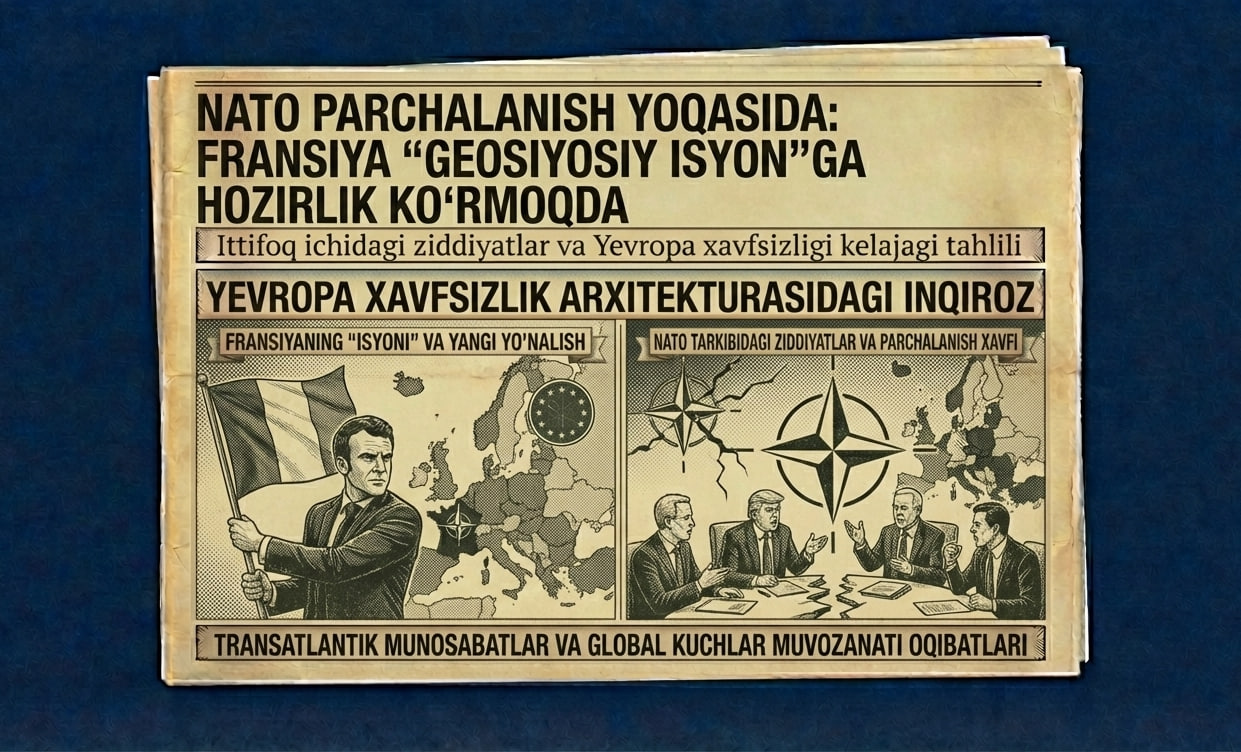
Clémence Guetté, Vice-Speaker of the French National Assembly, has formally introduced a parliamentary resolution calling for France to withdraw from NATO's integrated military command. This legislative move represents a profound geospatial (geopolitical) shift, triggered by U.S. President Donald Trump’s escalating threats to seize Greenland from Denmark, a key NATO ally.
The resolution, submitted by the "La France Insoumise" party, explicitly cites Trump’s aggressive foreign policy as the rationale for severing military ties with the U.S.-led alliance. Guetté asserted that the "American empire" poses a direct threat to global stability. The friction intensified on Friday when Trump claimed the U.S. would acquire Greenland "the hard way" if necessary, arguing that inaction would leave the strategic Arctic island vulnerable to Russian or Chinese influence.
Danish Prime Minister Mette Frederiksen has been firm, stating that any U.S. military move against Greenland would mark the "end of NATO." This creates a paradox regarding NATO’s Article 5; a conflict between members would lead to a catastrophic deadlock. In a show of solidarity, leaders from seven European nations—including the UK, Germany, and Italy—reaffirmed that "Greenland belongs to its people" and called for Arctic security based on international law and territorial integrity.
While the outcome of the resolution in the French Parliament remains uncertain, it highlights a growing trend of European strategic autonomy. Recalling Charles de Gaulle's 1966 withdrawal, France is once again questioning the stability of the trans-Atlantic partnership. With U.S. Secretary of State Marco Rubio refusing to rule out military options ahead of his visit to Denmark, the internal cohesion of NATO has never been more fragile.