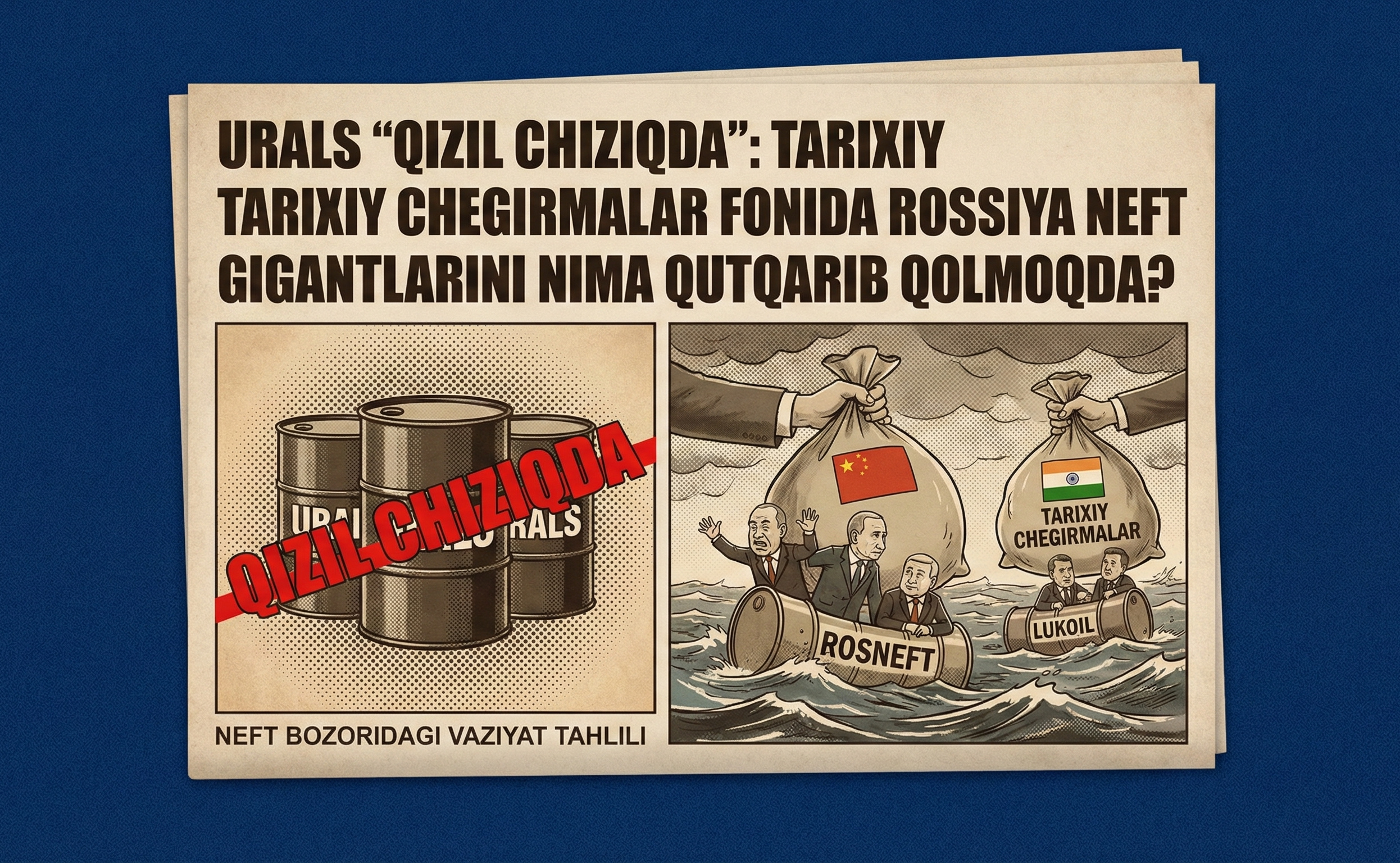
Urals on the "Red Line": What is Saving Russian Oil Giants Amidst Historical Discounts?

AI Summary
Western sanctions and global market dynamics have forced Russian oil exporters into a challenging new reality. According to recent Reuters calculations, discounts for Russian crude at export terminals have once again approached historical peaks, dropping $20 to $30 per barrel below Brent. This marks the widest gap since early 2022, exerting unprecedented pressure on exporters' net profits.
The State’s "Financial Shield": Tax Incentives The primary factor maintaining industry profitability under this geopolitical and economic pressure is the extensive range of tax incentives provided by the Russian government. Preferential rates for the Mineral Extraction Tax (MET) have become a matter of survival for producers.
Scope of Support: More than half of Russian oil producers currently utilize zero or reduced tax rates.
Net Profitability: Companies with zero tax rates manage to clear approximately $20 per barrel in net profit, even at December's Urals prices.
At-Risk Projects: Conversely, projects operating under full tax rates or involving complex extraction are already functioning at a loss—up to $5 "in the red" per barrel.
Logistic Labyrinths: The Shift Eastward The economics of oil are now heavily dictated by delivery destinations. Deliveries to Turkey are significantly more profitable than those to China, yielding up to $10 more per barrel. Meanwhile, ESPO crude shipped from the Far Eastern port of Kozmino continues to sell at a premium compared to Urals. Reducing freight costs has become the most critical lever for exporter profitability.
Conclusion The future of the Russian oil industry now depends not only on global price benchmarks but also on how long the state budget can sustain these tax breaks. The current survival formula for exporters is simple yet risky: bringing cheap oil to the global market through expensive logistical chains, backed heavily by state support.